



Project at a Glance
- Owner: CSX Transportation
- Design Engineer: Hatch & WRA
- General Contractor: Skanska–Fay JV
- Dewatering Subcontractor: Tri-State Civil Construction
- Location: Baltimore, Maryland
Project Overview
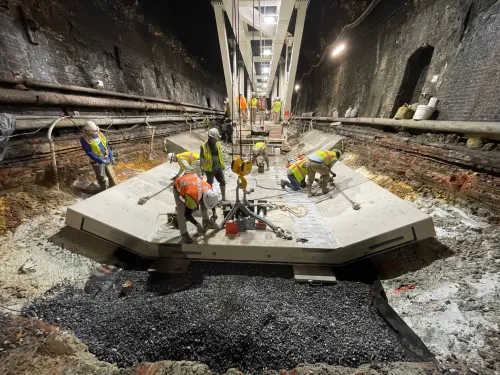
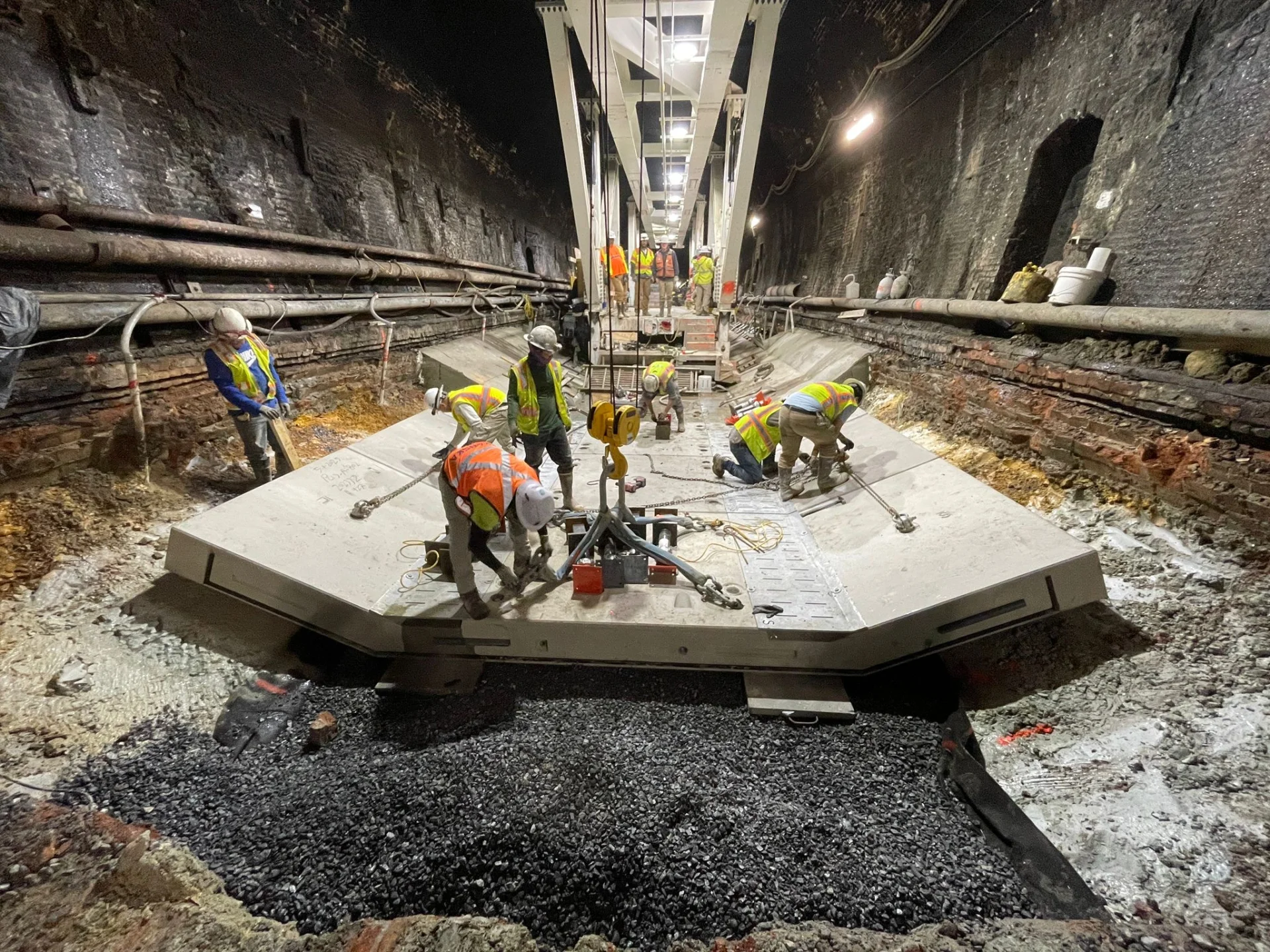
The Howard Street Tunnel Project involved lowering the existing tunnel invert to achieve approximately 21 feet of vertical clearance required for modern double-stack freight train operations. This major infrastructure improvement was critical to enhancing freight rail capacity and efficiency along the CSX transportation corridor.
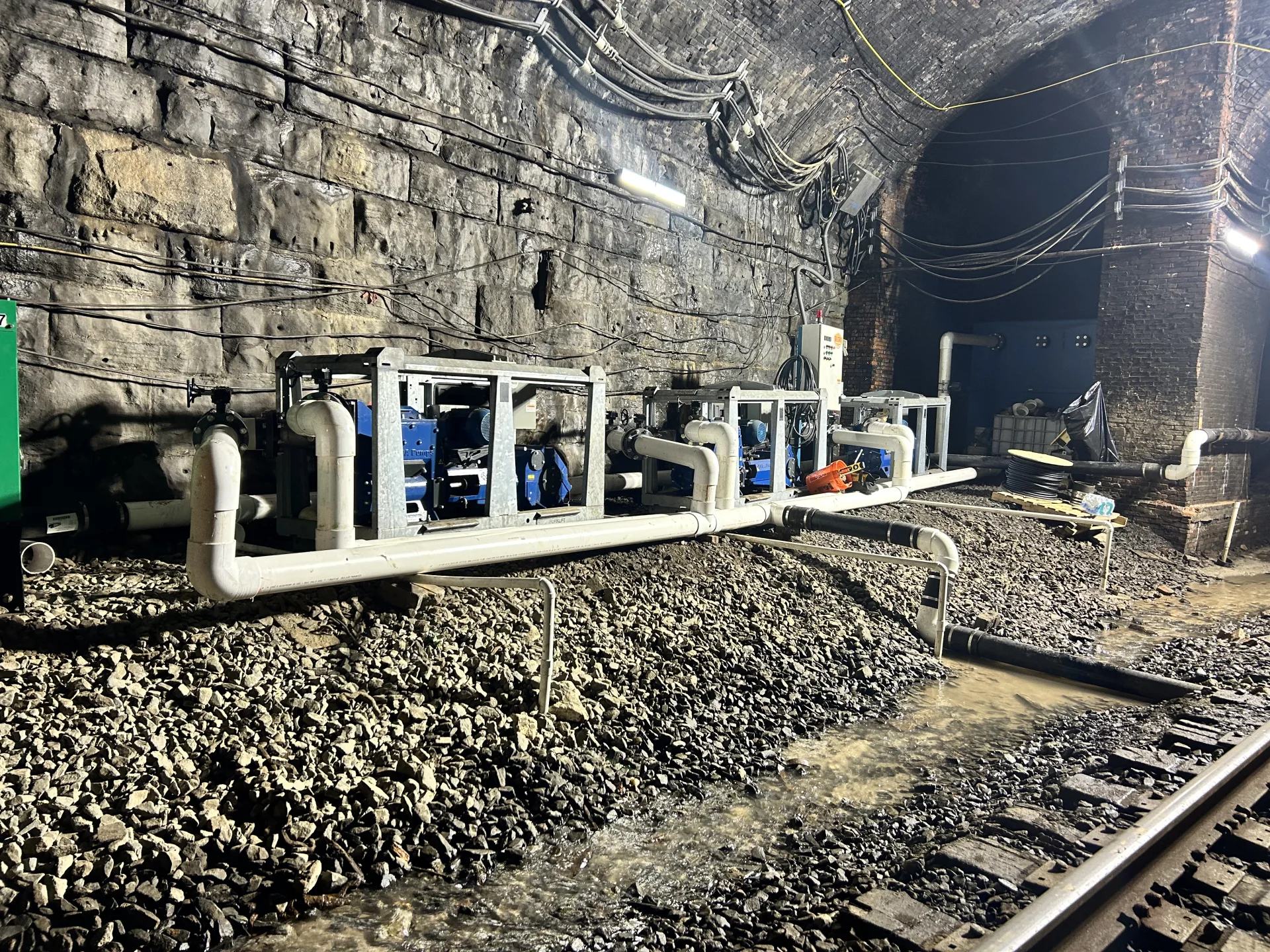
Tri-State Civil Construction was responsible for the installation and operation of the dewatering system required to support excavation and track lowering activities within the tunnel under extremely demanding schedule constraints and limited access conditions.
Importance of Dewatering
Dewatering operations were essential to the success of the project due to the need to lower the existing track elevation by approximately 3 to 5 feet. Running surface water and shallow groundwater conditions had to be effectively controlled throughout excavation activities to maintain safe and productive working conditions within the tunnel environment.
Because the project operated under a highly compressed construction schedule with restricted work windows, maintaining continuous and reliable groundwater control was critical to keeping the project on schedule and preventing delays to track lowering operations.
Project Challenges
One of the largest challenges on the project was the aggressive construction schedule, as wellpoint installation activities were on the project’s critical path.
Between June and December 2024, Tri-State was required to install approximately:
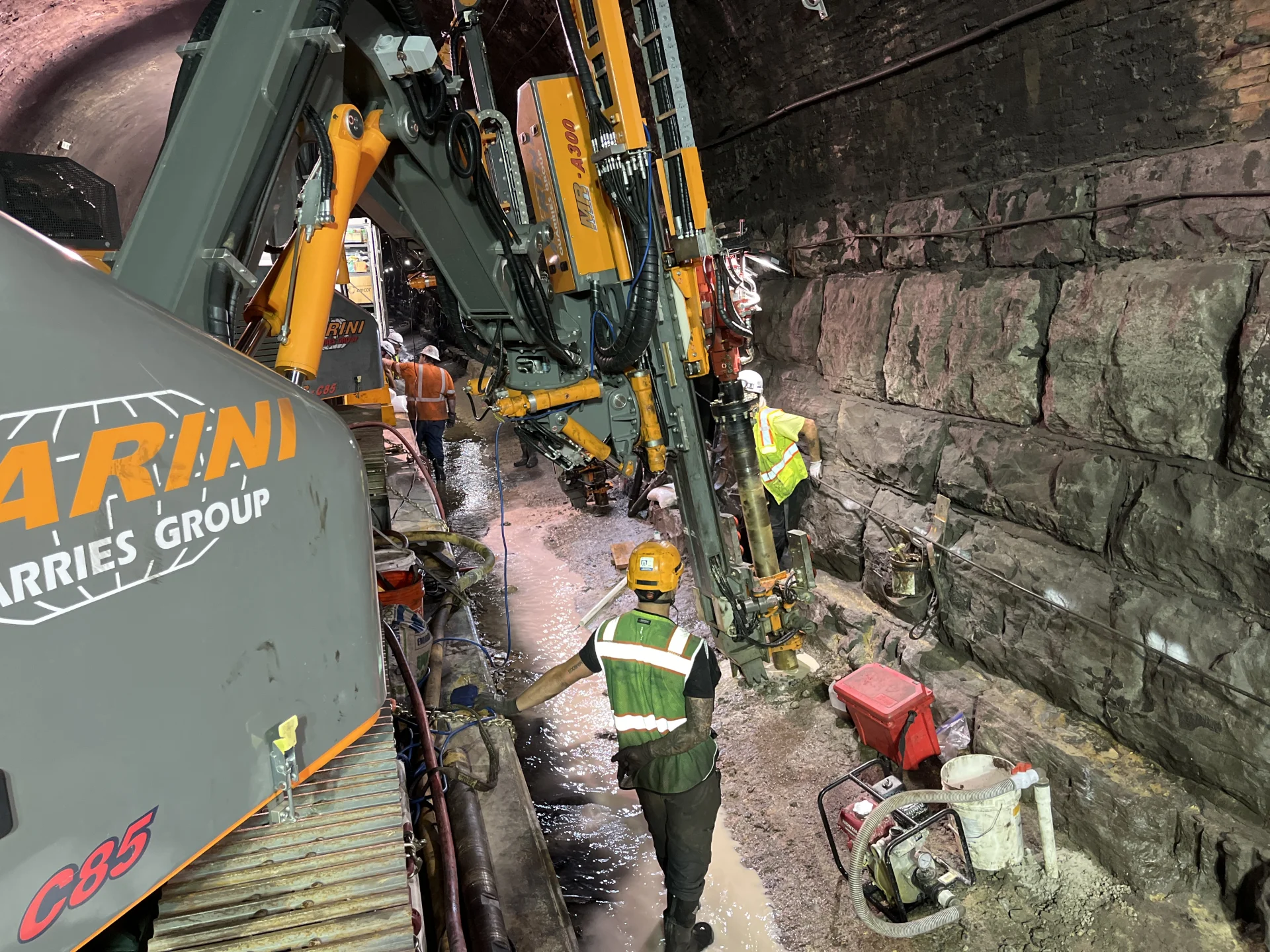
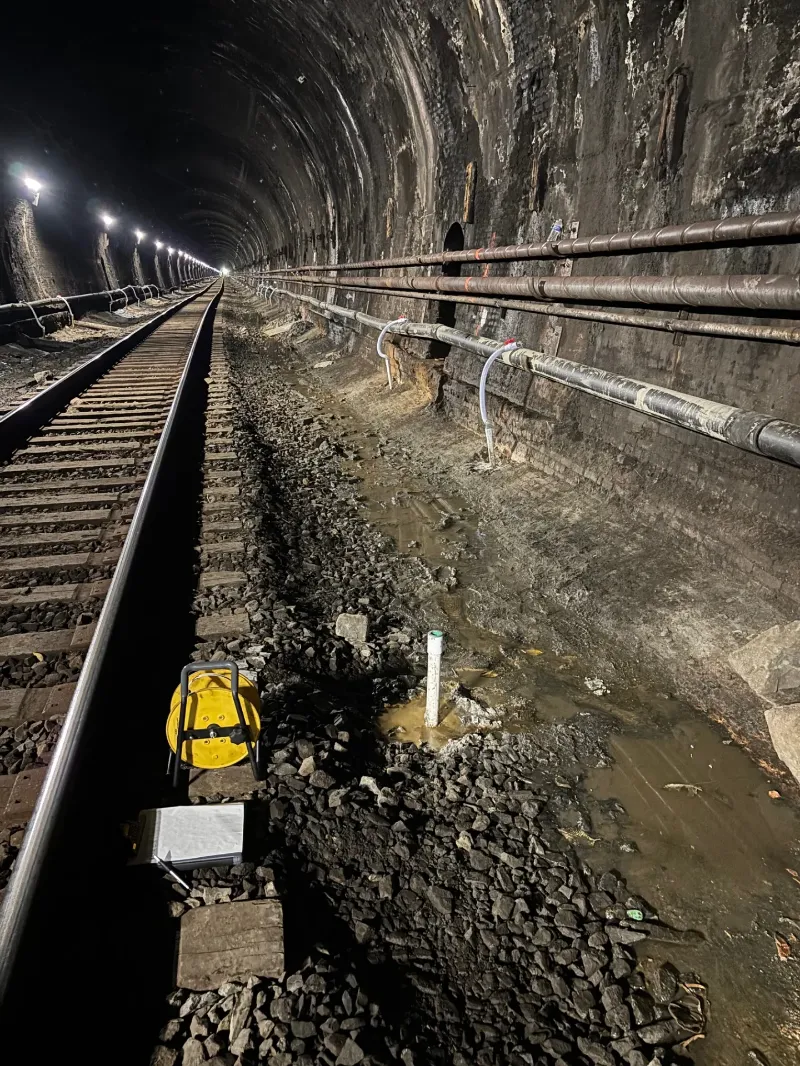
1,620 wellpoints
15,000 linear feet of header pipe
To meet project milestones, the team maintained a minimum production target of approximately 15 wellpoints per day while working within the logistical and operational constraints of an active rail tunnel environment.
The demanding schedule and production requirements raised a key operational challenge: how to continuously optimize installation efficiency while maintaining quality, safety, and system performance.
Key Lessons Learned
Pump testing was critical to optimizing the quantity and spacing of wellpoints while maintaining schedule performance.
Drill rig and equipment selection had to account for tunnel access limitations, operational clearances, and production efficiency.
Rail logistics and coordination significantly impacted daily productivity and work sequencing.
Backup plans, including multiple crews and contingency resources, were essential to accommodate outage variability and schedule shifts.
Continuous communication and coordination with the Skanska–Fay JV team were critical to maintaining workflow efficiency and meeting project deadlines.
The Howard Street Tunnel Project demonstrated Tri-State Civil Construction’s ability to successfully execute large-scale dewatering operations under complex rail infrastructure conditions while meeting aggressive production schedules and maintaining high standards of safety and performance.

 862.336.9700
 45 Whitney Rd, Mahwah, NJ 07430